
















Gail Northgrave gives us some perspectives on the real meaning of Christmas. Her message is: “If you look close enough you’ll see Him smiling at you through your loved ones”.
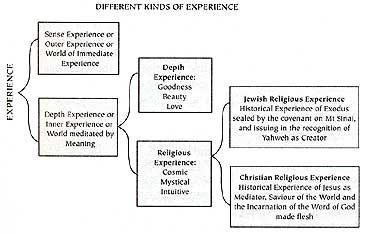
Dermot Lane invites Christians to deepen their faith by exploring some of the fundamental issues of contemporary theology, such as the religious meaning of experience, the nature of Christian revelation and the place of grace and faith in Christian life.
This excellent book by Hugh Rayment-Pickard is a model of clarity and accessibility. It introduces the key themes, movements and thinkers in theology and religious studies.
We should beware of neglecting the great religious value of our ordinary experience of the world, says Donagh O’Shea OP.
The word ‘saviour’ was a title applied to the gods of the Greek and Roman world but also to kings, philosophers, emperors, physicians and statesmen. James McPolin SJ gives us some idea of what it means to call Jesus ‘the merciful saviour’.
The central movement in Christianity is from death to life. Death is often the spiritual death of guilt, sin, injustice; life is often the liberating joy of doing the right thing. Columban Missionary Fr Shay Cullen sent us this story for Easter 2008.
Philip Fogarty SJ responds to the disappearance of the sense of God’s presence in the secular culture of our day, and he broaches in particular the question of how God can be understood in the context of a world of suffering.
This book by Joseph Ratzinger, now Pope Benedict XVI, is the first in a series. It is an attempt to give an inspiring account of Jesus. It looks at his baptism, his temptations, his proclamation of the kingdom of God, the sermon on the mount up to when he declares [...]
Carmel Mongey SSC finds a rich vein of knowledge about God’s motherly love for us all in a parable from St Luke’s Gospel and she suggests an Ignatian approach to exploring this text.
Jesus himself prayed in times of emergency and wanted others to pray along with him. His prayer shows him in a very intimate relationship with the one he calls “Abba”, Dada. He urges us to pray in like manner. James McPolin SJ introduces us to Jesus at prayer.
Teresa is bewildered by the suggestion that we should ‘fear God’. Bernard McGuckian SJ explains the background to such a teaching and the richness to its worth.
Eamonn Bredin invites all who wish to be disciples of Christ to look again at the Jesus of the New Testament and at the struggles of those first disciples who saw Jesus die as a criminal on the cross, and then to embark on a journey of re-assessing their own [...]
“We are made to be at home with God. That we are not yet at home is not, in itself, occasion for surprise. For we are travellers, pilgrim people….” This book by Nicholas Lash opens with a critique of Richard Dawkins, goes on to discuss the ‘impossibility of atheism’, distinguish [...]
Philip Fogarty SJ responds to a query about God’s seeming unfairness – specifically about God permitting terrible suffering around the world.
Central to Jesus’s life is his befriending of sinners. This was one of the central criticisms of his behaviour and the cause of much confrontation with the Jews and especially with Scribes and Pharisees. James McPolin draws out what the Gospels tell us.
Fr Peter McVerry SJ pushes us to take a look at Jesus and Christianity through the eyes of the poor, the sick and the marginalised. And this calls for some hard decisions, like, Who do you not want to live beside you?
Rev Francis Selman offers a fresh insight into many of the features of St Thomas Aquinas’s work with sections on God, the human being and moral life, as well as the means of salvation by Christ, the emotions, the resurrection, and our being drawn to God not only by our [...]
Boethius defined ‘person’ as an individual, and that became theologically and socially dominant, whereas Augustine understood person as ‘relatio’ and Aquinas as ‘relatio subsistens’. Tom Norris thinks if we could return to thinking of the divine person as ‘relatio’ we could more easily return to a spirituality of communion.
Kevin Seasoltz OSB sees God’s gift of his Spirit as a continuous transformation of the world. The Spirit is woven into the fabric of human life; and, even though the anguish of life may remain, the Spirit always provides the possibility of healing and renewal.
Jesus seems to have deliberately provoked conflict with the dominant social vision represented by the religious authorities by his compassionate healings on the Sabbath and his table-fellowship with outcasts. James Mc Polin SJ tells the story.
Jesus walked lightly, as a pilgrim, on the land he lived in. Celine Mangan OP draws some lesson from Jesus way of life to how we can care for the earth.
Piers Paul Read is a novelist, biographer and historian who says he is baffled that the Catholic Church in England has abandoned many of its traditional positions. In 29 elegant essays on aspects of the faith, the Church, liberation theology, history, sex and marriage, writers and saints he makes his [...]
Gerald O’Collins SJ has written a theological portrait of Jesus using the best of current biblical scholarship.
Cambridge University historian Eamon Duffy examines the meaning of the word ‘magisterium’ as it applies to the teaching authorities of the Church.

“Narrative” is a technique used by psychotherapists to encourage people reveal what the central concerns of their lives are. The stories Jesus tells show how he thought of himself, the meaning of his life and his message. James McPolin SJ explains.
This month (February 2009) the Pope asks us to pray “that people in religious life be ever more receptive to the Holy Spirit as they teach and serve the people of God”. Dermot Lane PP explains.
Fr Jack McArdle’s book is a call to return to the basics of the Catholic faith and to examine the role of God and Mary in our own spiritual growth.
Jesuit priest Jon Sobrino believes that global capitalism is driven by a dynamic of greed and oppression that dehumanises people, destroys family life and threatens mother earth. It is only when the poor themselves are given a voice and become agents of their own liberation that a way can open [...]
John Horan reflects on the heart’s longings, on how we may fill our lives with pleasures of all kinds, yet still find our deepest desire unfulfilled – until we discover that union with God was the answer all along.
Forgiveness is well known as being the central teaching of Christianity. It seems both eminently desirable and well-nigh impossible. Jesus’ teaching in the ‘Our Father’, his parable of the unmerciful servant and his encounter with Zacchaeus bring out how serious he is about this teaching. James McPolin SJ explains.


