















Mass Readings
Catholic Ireland
Liturgical Readings for : Tuesday, 2nd June, 2026Léachtaí Gaeilge
Next Sunday's Readings
Tuesday of The Ninth Week in Ordinary Time, Year 2
Saints of the Day: June 2 ; Ss St Marcelinus and Peter, martyrs,
C/f short history of today’s saints can be found below today’s Readings and Reflection
FIRST READING
A reading from the second letter of St Peter 3:11-15. 17-18
We are waiting for the new heavens and new earth.
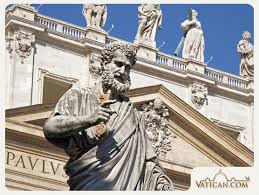 You should be living holy and saintly lives while you wait and long for the Day of God to come, when the sky will dissolve in flames and the elements melt in the heat. What we are waiting for is what he promised: the new heavens and new earth, the place where righteousness will be at home. So then, my friends, while you are waiting, do your best to live lives without spot or stain so that he will find you at peace.
Think of our Lord’s patience as your opportunity to be saved: our brother Paul, who is so dear to us, told you this when he wrote to you with the wisdom that is his special gift. You have been warned about this, my friends; be careful not to get carried away by the errors of unprincipled people, from the firm ground that you are standing on. Instead, go on growing in the grace and in the knowledge of our Lord and Saviour Jesus Christ. To him be glory, in time and in eternity. Amen.
The Word of the Lord Thanks be to God.
Responsorial Psalm Ps 89:2-4. 10. 14. 16 R/v 1
Response O Lord, you have been our refuge
from one generation to the next.
1. Before the mountains were born or the earth or the world brought forth,
you are God, without beginning or end. Response
2. You turn men back into dust and say: ‘Go back, sons of men.’
To your eyes a thousand years are like yesterday, come and gone,
no more than a watch in the night. Response
3. Our span is seventy years or eighty for those who are strong.
And most of these are emptiness and pain.
They pass swiftly and we are gone. Response
4. In the morning, fill us with your love; we shall exult and rejoice all our days.
Show forth your work to your servants;
let your glory shine on their children. Response
Gospel Acclamation Heb 4: 12
Alleluia, alleluia!
The word of God is something alive and active:
it can judge the secret emotions and thoughts.
Alleluia!
or Eph 1: 17. 18
Alleluia, alleluia!
May the Father of our Lord Jesus Christ enlighten the eyes of our mind,
so that we can see what hope his call holds for us.
Alleluia!
GOSPEL
The Lord be with you And with your spirit.
A reading from the Gospel according to Mark 12:13-17 Glory to you, O Lord
Give back to Caesar what belongs to Caesar – and to God what belongs to God
The Chief priests and the scribes and the elders sent to Jesus some Pharisees and some Herodians 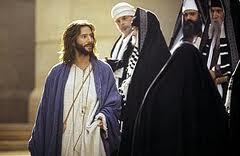 to catch him out in what he said. These came and said to him, ‘Master, we know you are an honest man, that you are not afraid of anyone, because a man’s rank means nothing to you, and that you teach the way of God in all honesty. Is it permissible to pay taxes to Caesar or not? Should we pay, yes or no?‘
Seeing through their hypocrisy he said to them, ‘Why do you set this trap for me? Hand me a denarius and let me see it.‘
They handed him one and he said, ‘Whose head is this? Whose name?’
‘Caesar’s’ they told him.
Jesus said to them, ‘Give back to Caesar what belongs to Caesar – and to God what belongs to God’.
This reply took them completely by surprise.
The Gospel of the Lord. Praise to you, Lord Jesus Christ.
********************
Gospel Reflection Tuesday, Ninth Week in Ordinary Time Mark 12:13-17
Today’s first reading from the second letter of Peter says, ‘Think of our Lord’s patience as your opportunity to be saved’. The Lord’s patience is our opportunity. When I was young, I used to hear a little jingle, ‘Patience is a virtue, keep it if you can, always in a woman, never in a man’. Perhaps there is some truth in that little saying! Patience is certainly a virtue and one we appreciate when we are shown it. Patience is the ability to wait on people. Jesus once spoke a parable about a barren fig tree that the landowner wanted to cut down. However, the landowner’s gardener was a much more patient man. He persuaded his master to leave the fig tree for another year during which he would tend to it to ensure it bore fruit the following year. Jesus might have seen something of himself in that gardener. He was patient with people, including his own disciples. So many times, they failed to grasp what he was trying to say to them, but he never gave up on them. Even when Peter, the leading disciple, denied him, he didn’t give up on him.
In today’s gospel reading, Jesus’ patience is put to the test. The Pharisees and the Herodians asked him what seemed like a serious question, ‘Is it permissible to pay taxes to Caesar or not?’ In reality, they were not looking for information but, as the gospel reading says, they were trying to catch Jesus out. They weren’t being sincere and, according to the gospel reading, Jesus saw through their hypocrisy. Yet, he was patient with them, asking them for a coin from their pockets and declaring that Caesar should be given back what belongs to him, but, more importantly, God should be given what belongs to God. What belongs to God according to Jesus?
Just a few verses later in Mark’s gospel, Jesus will answer that question, ‘you shall love the Lord your God with all your heart, and with all your soul, and with all your mind, and with all your strength’. It is only God, and God’s Son Jesus, who is worthy of our total loving loyalty, certainly not Caesar. Jesus’ patience towards his opponents on this occasion was their opportunity to learn a vital lesson for life. The Lord’s patience is always our opportunity.
________________________________
The Scripture Readings are taken from The Jerusalem Bible, published 1966 by Darton, Longman & Todd Ltd. and used with the permission of the publishers. http://dltbooks.com/
The Scripture Reflection is made available with our thanks from his book Reflections on the Weekday Readings : The Word is near to you, on your lips and in your heart by Martin Hogan and published by Messenger Publications c/f www.messenger.ie/bookshop/
________________
Saints of the Day: 22 May; St Marcelinus and Peter, martyrs
Two martyrs who died in 304, beheaded at Rome under the emperor Diocletian. Reputedly members of the Roman clergy, they are held in special honour in Rome itself, as evident in the basilica built over their tombs and their mention in Eucharistic Prayer I (The Roman Canon)
It is said that it was on Via Labicana in Rome 9. that Marcellinus who was a priest and Peter who was an exorcist, resided.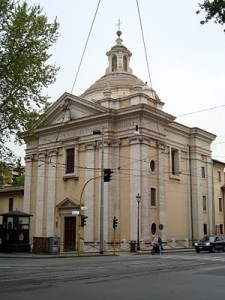 The fact that both saints were named together in Eucharistic Prayer 1 (The Roman Canon) indicates veneration in Rome very soon after their death.
Image right>: Station Church of Ss Marcellinus and Peter The Station is in the basilica founded by St. Helen on the Via Labicana, where were buried the bodies of St. Marcellinus .
Patrick Duffy tells their story.
Ministries in Troubled times
Peter, the exorcist, had been imprisoned by the judge Serenus for confessing the Christian faith. Artemius the prison-keeper had a daughter Paulina who was troubled by an evil spirit. Peter being a person entrusted by the Church with authority to cast out spirits was able to heal her. On seeing this, Artemius, his wife and neighbours were all converted to Jesus Christ. Peter then brought them to Marcellinus the priest, who baptized them.
 Answering with Christian Boldness
When the judge Serenus heard of this, he summoned Peter and Marcellinus before him, rebuked and threatened them, demanding that they deny Christ. When they answered with Christian boldness, they were executed and their bodies abandoned in a place called the Black Wood so that other Christians would not be able to bury or venerate their bodies.
Burial and Veneration
However, two Christian ladies, Lucilla and Firmina, came to know of this; they took the bodies and buried them with honour in a crypt near St Tiburtius, who was martyred some years earlier. The emperor Constantine is said to have built a church in their honour on the place and later had his mother St Helena buried there. The place where their bodies were found was afterwards called the White Wood.
An Epitaph by Pope St Damasus
Pope St. Damasus I (366-384), wrote that when he was a boy, he learnt the circumstances of their martyrdom from the lips of the executioner himself.(Percussor retulit mihi Damaso cum puer essem). He composed an epitaph in verse for their tomb: it states that through their martyrdom God gives us proof of his constant presence to his Church. A fragment of it survives in a nearby church. The fact that Marcellinus and Peter are mentioned in the Roman Canon indicates that they were held in high honour from soon after their death.
Translation of their Relics to Germany
In the early ninth century, Eginhard, secretary to and biographer of Charlemagne, became a monk in his later life. In 827 he asked Pope Gregory IV to send him some relics of martyrs to enrich the monasteries which he had founded or repaired. The Pope sent him the bodies of Ss Marcellinus and Peter. Eginhard located these relics at Seligenstadt near Frankfurt, where, in 829, he built a church and monastery in their honour.
In art
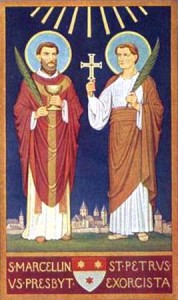
Both Marcellinus and Peter are depicted together, in ministerial garments, and bearing palms. In the early 17th century, the archaeologist Antonio Bosio (called the “Columbus of the Catacombs”) claimed in his book Roma Sotterranea that an ancient fragment he found represents Peter, Marcellinus, and Paulina standing together.
____________________________
******************************
Memorable Saying for Today
Nothing can happen to me (or us) that God does not want.
And all that He wants, no matter how bad it may appear to us,
is really for the best
~ St Thomas More ~
******************************